Prices Would Have to Fall About a Third to Offset Today’s Rates. Here’s What Greenwich Buyers and Sellers Can Do Instead

The headline math is real: for an owner who locked a mortgage near 3.8 percent, the payment on today's 7.28% rate would only match if the price fell by roughly a third. But that is a reason to stop waiting for a crash, not a reason to stay out. A one-point drop in the rate lowers the monthly payment as much as a roughly 10 percent price cut, and buyers can negotiate price, seller credits and rate buydowns today and refinance later if rates ease.
Sellers who price to what buyers can actually pay each month, and who are willing to help with financing, are the ones closing deals.
A New York Post headline this week put it bluntly: home prices would need to crash 32 percent to offset today's high mortgage rates. It is the kind of line that makes buyers want to wait and sellers want to panic. The useful question is different: what does the arithmetic actually tell a Greenwich buyer or seller to do?
Method note: the figures below are our own calculations from Freddie Mac's published weekly mortgage rate, not the Post's methodology. Standard 30-year fixed principal-and-interest math, nothing else.
Where the 32 percent comes from
A mortgage payment is driven by two things: the amount borrowed and the interest rate. When rates rise, the same payment supports a much smaller loan. Freddie Mac's survey put the average 30-year fixed rate at 7.28% for the week of October 1, 2026, up from 6.34% a year earlier. Compare that with the 3 to 4 percent mortgages that millions of owners locked in earlier in the decade, and the gap is large.
Here is how far a price would have to fall to keep the monthly principal-and-interest payment equal to what the same loan would have cost at an earlier rate:
| Earlier mortgage rate | Price drop needed to match today's 7.28% payment |
|---|---|
| 3.00% | 38% |
| 3.50% | 34% |
| 4.00% | 30% |
| 5.00% | 22% |
| 6.34% | 9% |
30-year fixed, same down payment percentage, principal and interest only. Today's rate is Freddie Mac's survey average for conforming loans; jumbo rates, which apply to most Greenwich purchases, can be higher or lower depending on the lender.
Around a 3.8 percent earlier rate, the answer lands near 32 percent. That is why the headline resonates with anyone who remembers cheap money. It is also why it is an incomplete guide to the decision in front of you: a price crash is not on offer, and the same math points to levers you can actually pull.
The lever that matters: the rate moves the payment as much as the price
Look at the payment from the other side. On a $1,000,000 loan, the monthly principal and interest changes a lot with the rate:
Monthly principal and interest per $1,000,000 borrowed
30-year fixed. Calculated, not quoted; your lender's loan estimate governs.A quarter-point reduction saves about $169 a month per $1,000,000 borrowed, and a half-point saves about $336. A one-point reduction, from 7.28% to 6.28%, lowers the payment by about 10 percent, the same relief as a 10 percent price cut. In other words, a buyer does not need the market to fall a third. Even modest rate relief, whether through the market, a negotiated buydown or a later refinance, does real work.
A worked example at Greenwich price levels
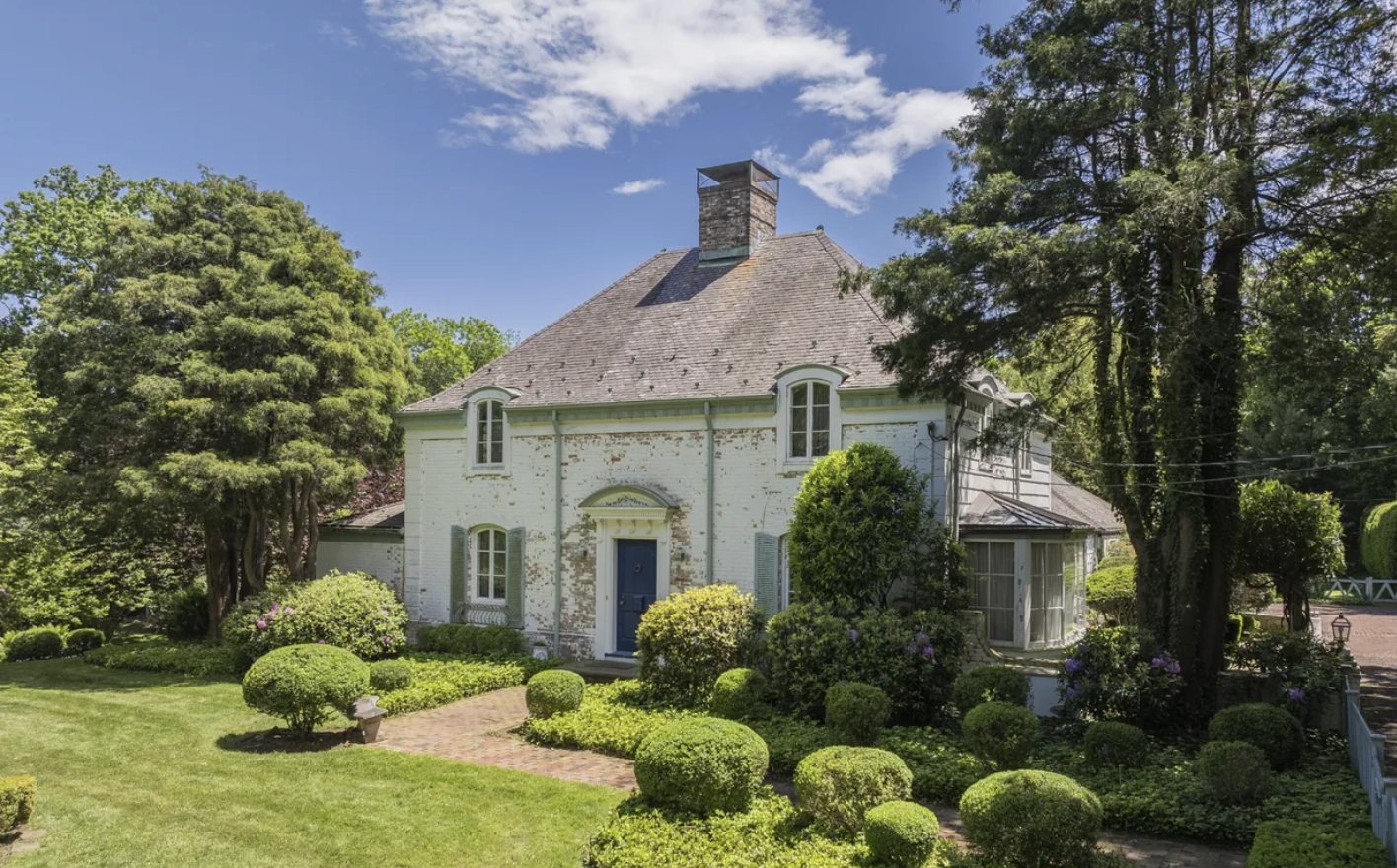
Take the home pictured above: a four-bedroom Greenwich house built in 1941, asking $6.95 million. With 20 percent down, the loan is about $5.56 million. The monthly principal and interest at several rates:
| Mortgage rate | Monthly principal and interest | Saved vs. 7.28% |
|---|---|---|
| 7.28% | $38,042 | $0 |
| 7.00% | $36,991 | $1,051 |
| 6.50% | $35,143 | $2,899 |
| 6.00% | $33,335 | $4,707 |
Illustrative: asking price of $6,950,000, 20% down, 30-year fixed. Taxes, insurance and any jumbo-loan pricing differences are extra. Property tax at Greenwich's 10.125 mill rate and Connecticut's 70% assessment ratio would be roughly $49,258 a year, about $4,105 a month, if assessed at the asking price; the actual bill depends on the property's assessment.
Two takeaways. First, the rate gap between 7.28% and 6.5% is worth about $2,899 a month on this loan, a number that deserves as much negotiating attention as the price. Second, Greenwich's low mill rate (10.125, compared with 16.05 in Darien and 16.967 in New Canaan) trims the carrying cost on the tax side, which partly offsets the financing cost and is a genuine local advantage.
Positive moves for buyers
- Shop the payment, not the headline rate. Get written loan estimates from at least three lenders, including a private-bank or portfolio lender for jumbo loans. Rate, points and fees differ more on large loans than on conforming ones.
- Negotiate the financing, not just the price. A seller credit used for a rate buydown can lower your payment more efficiently than the same dollars as a price cut. On 80 percent financing at 7.28%, a $100,000 price reduction lowers the payment by about $547 a month, while on this example loan a quarter-point lower rate saves about $939. Ask your lender to price both.
- Buy the house, refinance the rate. You can refinance a mortgage if rates fall; you cannot renegotiate a purchase price after closing. If the home is right and the payment is comfortable today, waiting for a crash that may not come has its own cost. There is no guarantee rates will fall, so only buy at a payment you can carry at today's rate.
- Use your equity and your sequencing. If you are selling a New York apartment, the proceeds can lower the loan and the rate you need to rely on. Our timing guide covers bridge loans and rent-backs.
- Be the easy offer. When financing is expensive, sellers value certainty. A strong pre-approval, a reasonable inspection plan and a flexible closing date can win a negotiation without a higher price. See our guide to winning competitive offers in Greenwich.
- Ask about adjustable-rate and other structures, carefully. Some lenders offer products that lower the early payment. They carry resets and risk, so understand the worst case before you choose one.
Positive moves for sellers
- Price to the buyer's monthly reality. Buyers decide on the payment. A list price that ignores the 7.28% rate environment invites showings without offers. Anchor on recent closed sales of truly comparable homes, as outlined in our pricing guide, and let Peter pull current, dated comparables for your property.
- Treat concessions as a tool. A credit toward a rate buydown or closing costs can bridge a gap that a price cut would not, and it can protect your headline sale price. Compare the cost to you of each option with a lender quote before you decide.
- Do the lock-in math honestly. If you hold a low-rate mortgage, a move means a higher payment on the next home. Run the full picture: your equity, the next purchase price, the new rate and Greenwich's tax advantage. For many sellers the equity built up since they bought is substantial, and a life change (downsizing, relocation, a school transition) is often worth more than the rate.
- Win on condition and certainty. Buyers paying more for money are more price-sensitive and more selective. Pre-inspection fixes, clean documentation, flexible closing and a clear rent-back option can lift the net outcome.
- Remember your buyer pool. Some Greenwich buyers have equity or cash to put to work and are less rate-sensitive than buyers who need maximum financing. The right pricing and marketing strategy depends on which group your home appeals to.
Bottom line
A 32 percent crash is a headline, not a plan. The more useful read of the same math is that financing terms, negotiating structure and honest pricing give buyers and sellers real room to make a deal work now. Peter builds that math for specific homes and price points, with a lender-quoted payment, so you can decide on numbers rather than headlines.
Frequently asked questions
Would home prices really have to fall 32 percent for buyers to break even on today's rates?
Only against a very low earlier rate. In our own calculation, the price needed to match today's 7.28% payment falls about 32 percent when compared with a mortgage near 3.8 percent, about 22 percent against a 5 percent mortgage and about 9 percent against last year's 6.34 percent average. The comparison depends entirely on the rate you pick.
Should I wait for rates or prices to fall before buying in Greenwich?
Waiting is a bet, not a strategy. Rates could fall, stay put or rise, and a big drop in Greenwich prices is not something to plan around. A more reliable approach is to buy a home at a payment you can carry at today's rate, negotiate price, credits and any rate buydown, and treat a future refinance as a bonus rather than the plan.
What is a mortgage rate buydown and does it help?
A buydown lowers your interest rate in exchange for an upfront payment, sometimes funded by a seller credit. It can reduce your monthly payment for a set number of years or for the life of the loan, depending on the structure. Ask your lender to price a permanent buydown and a temporary one and compare the total cost to the savings.
Is now a bad time to sell my Greenwich home because of high rates?
It depends on your next move and your price expectations. Buyers are payment-sensitive, so realistic pricing and flexible terms matter more than in a low-rate market. If you must also buy, run the full numbers on your equity, the next purchase and the tax difference. Peter can build a sell-and-buy comparison for your situation.
Do mortgage rates matter as much for luxury buyers in Greenwich?
They matter for anyone who finances, and the dollar amounts are large on a big loan. Some buyers at higher price points put in substantial equity or buy with little financing, which can make them less rate-sensitive. Jumbo loans are priced by each lender, so the quoted rate can differ from the conforming-loan averages reported nationally.
- New York Post, “Home prices would need to crash 32% to offset today’s high mortgage rates”, October 5, 2026. Cited for its headline; the calculations in this article are independent.
- Freddie Mac, Primary Mortgage Market Survey: 30-year fixed average of 7.28% for the week of October 1, 2026, and 6.34% a year earlier. The survey covers conforming loans.
- Greenwich Board of Estimate and Taxation, 2026-27 mill rate of 10.125, set May 18, 2026.
- Town of Greenwich, 2025 Revaluation: 70 percent assessment ratio.
- Payment figures are standard 30-year fixed principal-and-interest calculations by Greenwich Home Intel. Quotes from your lender will differ.
Talk it through with Peter.
A short, confidential conversation can turn this framework into a plan for your move.
General information, not legal, tax or financial advice. Figures are cited to the named sources and were checked in October 2026; market data changes, so ask Peter for a current, sourced pull before relying on any number. Consult a Connecticut real estate attorney, your lender and a tax advisor before you act.