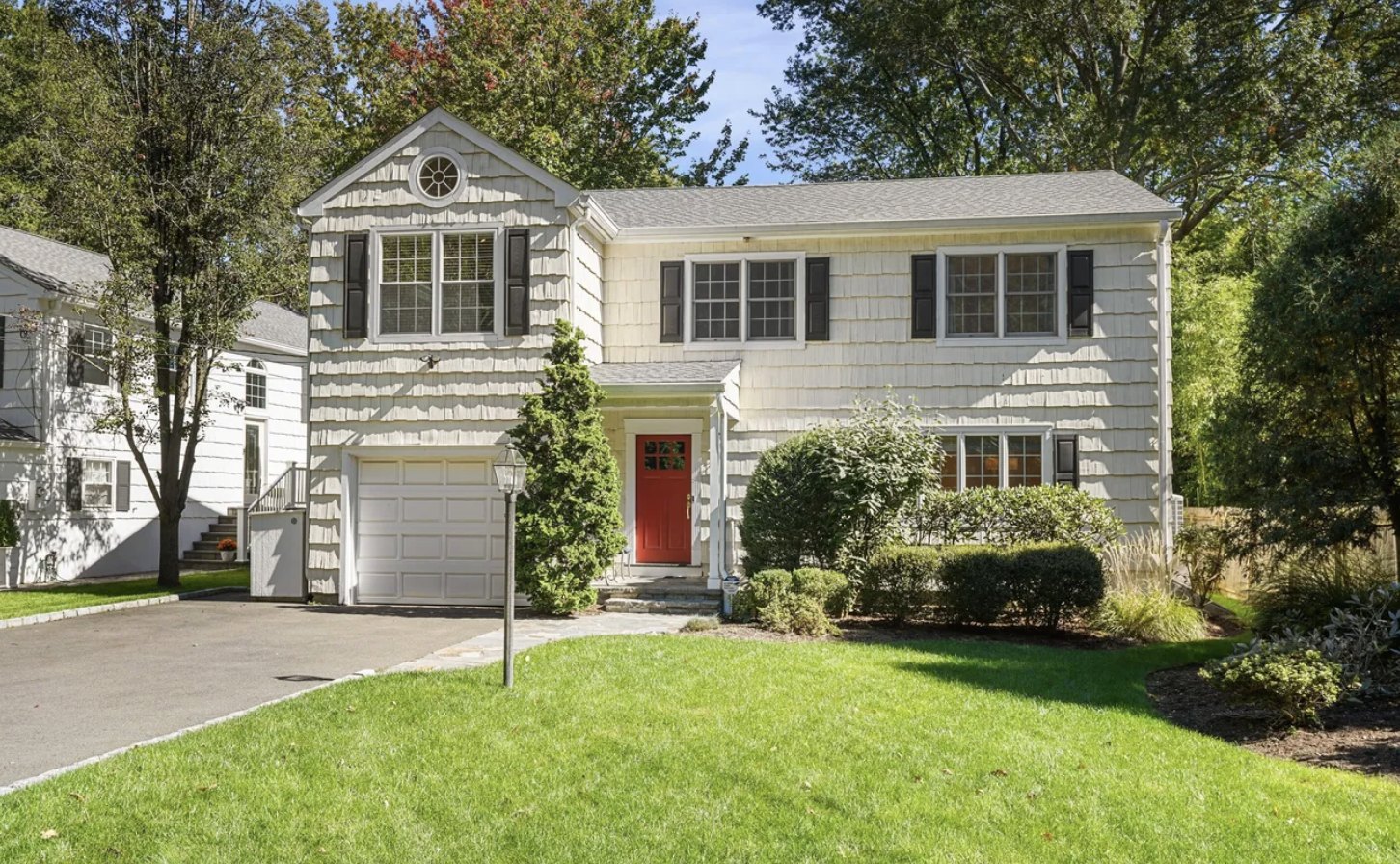
What It Costs to Sell a Greenwich Home: Conveyance Tax, Closing Costs and Your Net Proceeds

Greenwich sellers pay Connecticut conveyance tax of 0.75% to $800,000, 1.25% to $2.5 million and 2.25% above, plus 0.25% to the town. On a $2,195,000 sale, that is $28,925, or 1.32% of the price.
Commission, closing attorney, loan payoff and any taxable gain come on top. Your net is the sale price minus all of them.
What a Greenwich seller pays at closing
The price on the contract is not the check you receive. Eight items sit between the two, and only the first is set by law:
- Conveyance tax, state and town, paid by the seller.
- Broker commission, negotiated and written into your listing agreement.
- Your closing attorney. Connecticut closings run through attorneys, and you pay for yours.
- Mortgage payoff and the release of any other lien.
- Prorations. Property tax and utilities are split between you and the buyer as of the closing date.
- The property condition report credit, $500, if you do not deliver the report in time.
- Prep, repairs and credits you agree to after the buyer’s inspection.
- Income tax on any gain above the federal home-sale exclusion.
The sections below put numbers on each one, using the home pictured above as the example. It is a five-bedroom house asking $2,195,000. Nothing here predicts what it will sell for. It is a worked example.
Connecticut conveyance tax: the part you cannot negotiate
The conveyance tax on a Greenwich home sale has two layers. The state charges 0.75% on the first $800,000 of the price, 1.25% on the portion from $800,000 to $2,500,000 and 2.25% on the portion above $2,500,000. The town adds 0.25% of the full price. The seller pays, and the town clerk collects it at closing.
Conveyance tax = 0.75% × first $800,000 + 1.25% × price between $800,000 and $2.5 million + 2.25% × price above $2.5 million + 0.25% × full price.
The state’s Department of Revenue Services lists the three residential brackets, and the General Assembly’s research office lists the municipalities that add a second municipal rate on top of the 0.25% base. Greenwich is not on that list, so the town portion is the base 0.25%. Your closing attorney will confirm the exact figure on the conveyance tax return.
| Sale price | State tax | Town tax (0.25%) | Total | % of price |
|---|---|---|---|---|
| $1,500,000 | $14,750 | $3,750 | $18,500 | 1.23% |
| $2,000,000 | $21,000 | $5,000 | $26,000 | 1.30% |
| $2,195,000 | $23,437.50 | $5,487.50 | $28,925 | 1.32% |
| $3,000,000 | $38,500 | $7,500 | $46,000 | 1.53% |
| $5,000,000 | $83,500 | $12,500 | $96,000 | 1.92% |
| $10,000,000 | $196,000 | $25,000 | $221,000 | 2.21% |
Calculated by Greenwich Home Intel from the state brackets and the 0.25% base municipal rate. The highlighted row is the home pictured above at its asking price.
Total conveyance tax as a share of the sale price
The effective rate rises with the price because of the 2.25% bracket. A $1.5 million seller loses 1.23% of the price to the tax and a $10 million seller loses 2.21%. Most of the difference comes from the top bracket, which applies only to dollars above $2.5 million.
Two details matter at the high end. First, Connecticut residents who paid the 2.25% tier may be able to claim a state income tax credit that is spread over several years, so ask your tax professional how it applies to your return. Second, the exemptions on the state’s conveyance tax return cover specific transfers, such as a conveyance between spouses. An ordinary sale to a buyer does not qualify.
Commission: the largest line, and the one you set
Commission is the biggest cost after the tax and the loan payoff, and it is the only large cost you control. It is negotiated between you and your listing brokerage, it is not fixed by law, and it belongs in the listing agreement before you sign. Ask every agent you interview for the full fee in writing, including any compensation you are offering to the buyer’s broker and what marketing and services the fee includes.
Each percentage point of total commission is worth $21,950 on a $2,195,000 sale and $30,000 on a $3,000,000 sale. A half-point difference between two agents on that first sale is $10,975, which is more than the entire town conveyance tax. Compare the price and the plan together, not the price alone.
The other closing costs
Your attorney. The seller’s attorney reviews the contract, clears title issues, prepares the conveyance tax return and runs the closing. Ask for a flat quote when you list.
Loan payoff. Your lender’s payoff letter is the number that matters, not your last statement. It includes interest through the closing date, and your loan documents say whether any prepayment charge applies.
Prorations. The attorney’s closing statement splits property tax and utilities by day between you and the buyer. At Greenwich’s 10.125 mills, a home assessed at $2,195,000 carries about $15,557 a year, so the split is a real number. Our property tax guide shows how the bill is calculated.
The condition report credit. Connecticut requires a seller of residential property with four or fewer units to give the buyer a Residential Property Condition Report before the buyer signs a binder or purchase contract. If you do not, you credit the buyer $500 at closing. Deliver the report. Skipping it saves nothing and invites questions.
Repairs and credits. The inspection is where a price gets renegotiated. Budget for it before you accept an offer, not after.
Capital gains: what the federal exclusion covers
If you owned the home and lived in it as your main home for at least two of the five years before the sale, the IRS lets you exclude up to $250,000 of gain, or $500,000 if you are married and file jointly. You can use the exclusion once in any two-year period. Selling expenses, such as commissions and legal fees, reduce your sale price when you calculate the gain. The gain is that reduced amount minus your adjusted basis, which starts with what you paid and includes the capital improvements you made.
In Greenwich, a long holding period can push the gain past $500,000 without any exceptional appreciation. If that describes you, three habits help. Keep the receipts for kitchens, additions, roofs and other capital improvements, because they raise your basis. Check the two-of-five-year test before you move out, not after. And expect Form 1099-S: the IRS says to report a sale on Form 8949 when you receive one, even if you have no taxable gain.
The calculator below includes an optional gain estimate. It stops before tax rates, because the rate depends on your income and on Connecticut’s own rules. A CPA should run that last step.
Your net proceeds on the pictured home
Here is the same $2,195,000 sale at three illustrative commission levels. The table assumes $5,000 for attorney and other closing costs, which is a placeholder, and it stops before loan payoff and income tax.
| 4% total commission | 5% total commission | 6% total commission | |
|---|---|---|---|
| Sale price | $2,195,000 | $2,195,000 | $2,195,000 |
| Conveyance tax (state and town) | −$28,925 | −$28,925 | −$28,925 |
| Commission | −$87,800 | −$109,750 | −$131,700 |
| Attorney and other closing costs (assumed) | −$5,000 | −$5,000 | −$5,000 |
| Proceeds before loan payoff and income tax | $2,073,275 | $2,051,325 | $2,029,375 |
| Total cost of selling, % of price | 5.55% | 6.55% | 7.55% |
Illustration by Greenwich Home Intel. The 4%, 5% and 6% commission levels are not quotes and not recommendations. Your rate is negotiated. The $5,000 closing cost figure is an assumption, so replace it with your attorney’s quote.
Read the last row. On this sale, the costs above the loan payoff run from about 5.5% to 7.5% of the price depending on the commission. On a $2,195,000 sale, that is a swing of $43,900 between the lowest and highest commission shown. Use the estimator below with your own numbers.
Net proceeds estimator
Starts with the home pictured above. Commission and closing-cost fields are placeholders: replace them with the figures in your listing agreement and your attorney’s quote.
How to keep more of the sale price
- Price to the buyer pool, not to a number you need. A listing that sits and takes a cut costs you carrying time. On the pictured home, property tax alone is about $1,296 a month at its asking price, before insurance and utilities. Our guide to pricing a Greenwich home covers how to test a number against closed sales.
- Negotiate the plan, not just the rate. Compare fee, marketing, pricing strategy and buyer-side compensation across the agents you interview.
- Know what buyers will underwrite. Buyers add the tax bill to the payment, and rates matter. See what Greenwich buyers and sellers can do about mortgage rates.
- Protect your basis. Pull the receipts for capital improvements before you list.
- Talk to your attorney and CPA early. The conveyance tax is fixed, but the timing of your sale, your ownership dates and your next purchase are not.
If you are selling in a specific neighborhood, the costs above are the same but the pricing is not. Start with which Greenwich you are selling in, then see how Peter works with sellers.
Frequently asked questions
Who pays the conveyance tax when selling a home in Greenwich CT?
The seller. Connecticut puts the real estate conveyance tax on the seller, and the town clerk collects it at the closing and passes the state share to the Department of Revenue Services. Your closing attorney deducts it from your proceeds. The contract can assign it differently, but that is unusual, so plan on paying it. The state portion is 0.75% up to $800,000, 1.25% from $800,000 to $2.5 million and 2.25% above that, and the town adds 0.25%.
How much is the conveyance tax on a $2 million home in Greenwich CT?
$26,000 in total: $21,000 state and $5,000 town, or 1.30% of the price. On a $3 million sale it is $46,000, or 1.53%, because the 2.25% state rate applies to the part of the price above $2.5 million. The rate on each added dollar rises with the price, so the effective rate climbs as the sale price does.
Do I owe capital gains tax when I sell my Greenwich CT home?
Only on gain above the federal exclusion. If you owned and lived in the home as your main home for at least two of the five years before the sale, you can exclude up to $250,000 of gain, or $500,000 if you are married filing jointly. Commission and legal fees reduce the amount realized. Many long-time Greenwich owners clear the exclusion, so run the numbers with a CPA before you list.
Does a Greenwich CT seller have to provide a property condition report?
Yes. Connecticut requires the seller of residential property with four or fewer units to give the buyer a Residential Property Condition Report before the buyer signs a binder or purchase contract. If the seller does not provide it, the seller must credit the buyer $500 at closing. The report is a disclosure, not a warranty, and it does not replace the buyer’s own inspection.
How should I price my Greenwich CT home to net what I need?
Start with the number you need after the conveyance tax, commission, closing costs and loan payoff, then test it against closed sales for your neighborhood, street and condition. A price set only by what you need to net tends to miss the buyer pool. Our guide to pricing a Greenwich home shows what a sound pricing opinion includes. See How to Price a Greenwich Home.
How will buyers look at the property taxes on my Greenwich CT home?
They will turn the tax bill into a monthly number and add it to the mortgage payment. At Greenwich’s 10.125 mill rate, a home assessed at $2,195,000 carries about $15,557 a year, or $1,296 a month. Know your own figure before the first showing. See Greenwich Property Taxes Explained.
- Connecticut Department of Revenue Services, Real Estate Conveyance Tax Change: residential state brackets of 0.75%, 1.25% and 2.25% at $800,000 and $2,500,000.
- Connecticut General Assembly, Office of Legislative Research, Real Estate Conveyance Tax (2020-R-0020): 0.25% base municipal rate, the list of municipalities with an additional rate, seller pays, and the income tax credit on the top tier.
- Connecticut Department of Revenue Services, Real Estate Conveyance Tax Information (Form OP-236): filing and exemption codes.
- Mancuso & Carey, Connecticut Conveyance Tax: What Sellers Pay: rates confirmed as current as of July 22, 2026.
- Internal Revenue Service, Publication 523, Selling Your Home: $250,000 and $500,000 exclusion, two-of-five-year test, selling expenses, Form 1099-S and Form 8949.
- Connecticut Department of Consumer Protection, Residential Property Condition Report: Conn. Gen. Stat. §§ 20-327b and 20-327c, including the $500 credit.
- Greenwich mill rate and assessment ratio are from our property tax guide. Every dollar figure in the tables and the estimator is calculated by Greenwich Home Intel from the rates above. Confirm the figures for your sale with your closing attorney and tax advisor.
Find out what your Greenwich home would net.
A short, confidential conversation, with your numbers, before you decide when or whether to list.
General information, not legal, tax or financial advice. Rates and rules were checked in October 2026 and can change; confirm them for your sale. Commission is negotiable and is not set by law. Consult a Connecticut real estate attorney, a CPA and your lender before you act.