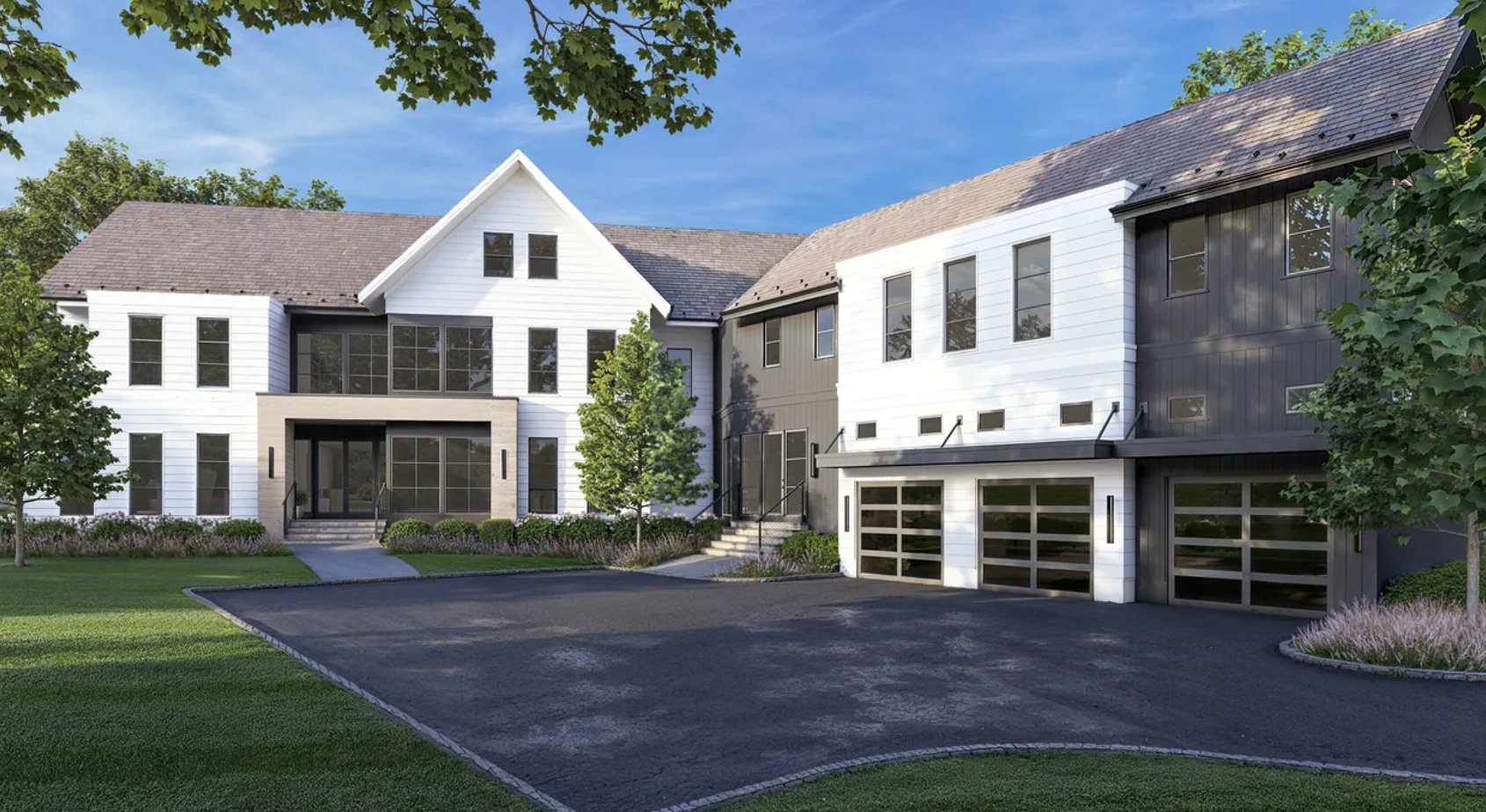
Buying New Construction in Greenwich, CT: The Builder Contract, the Connecticut New Home Warranty, the Certificate of Occupancy and What to Ask Before You Sign

A newly built Connecticut home comes with statutory warranties that the contract and deed cannot take away. The statute says the home must be free from faulty materials, built to sound engineering standards, built in a workmanlike manner and fit for habitation, and the one-year clock runs from delivery or possession, whichever comes first. Greenwich also requires a certificate of occupancy, with sign-offs from several town offices, before anyone may live in a new building.
This is general information, not legal advice. Your Connecticut attorney should read the builder’s contract before you sign.
New construction in Greenwich is bought differently from a resale. The seller is a builder, the home may not be finished when you sign, and the paperwork centers on a contract the builder drafted. This guide sticks to what Connecticut statutes and the Town of Greenwich say.
It does not give construction costs, deposit amounts or timelines, because we have no primary source for them. The checklist builder uses only the sources listed below.
The Connecticut new home warranty
Chapter 827 of the General Statutes, Sections 47-116 to 47-121, covers a vendor who sells a newly constructed single family dwelling or a qualifying condominium unit. Two kinds of warranty apply.
- Express warranties (Section 47-117). Written affirmations, written descriptions, and samples or models that are part of the bargain create a warranty that the home conforms to them. Formal words such as “warranty” are not needed, but a mere opinion or commendation of value does not create one.
- Implied warranties (Section 47-118). Every sale by a vendor implies that the home is free from faulty materials, constructed according to sound engineering standards, built in a workmanlike manner and fit for habitation. If you rely on the vendor’s skill and judgment for a stated purpose, the home is also implied to be reasonably fit for that purpose.
Neither can be excluded or modified by the contract or the deed. For a completed home only, a detailed written instrument signed by the buyer that states the warranty and the buyer’s consent can exclude or modify them, which is why you should not sign any separate document without your attorney.
| Question | What the statute says |
|---|---|
| Who is covered | The original purchaser, and heirs or designated representatives |
| When the warranty ends | One year after delivery or one year after the buyer takes possession, whichever comes first, for a completed home. For an incomplete home the period runs from completion |
| What the implied warranty promises | Free from faulty materials, built to sound engineering standards, built in a workmanlike manner, fit for habitation |
| What it does not reach | Conditions that a reasonably diligent purchaser would have found on inspection when the contract was signed |
| Can the contract or deed exclude it | No. A later detailed written instrument signed by the buyer can do so only for a completed home |
| Certificate of occupancy warranty | Section 47-121: a certificate of occupancy for a newly built single family dwelling carries an implied warranty that the vendor complied with the building code or its customary interpretation. No action may be brought more than three years after it is issued |
Sources: Connecticut General Statutes Chapter 827, Sections 47-116 to 47-121 (2025 publication; the page notes the 2026 supplement controls for later amendments), and the Department of Consumer Protection’s New Home Warranty page. The statutes also say these warranties are in addition to other warranties created or implied in law. Confirm the current text with your attorney.
Builder registration and the guaranty fund
Chapter 399a defines a new home construction contractor as a person who contracts with a consumer to construct or sell a new home, or part of one, before occupancy, and it refers to a certificate of registration issued by the Department of Consumer Protection. We did not read the registration section itself, so ask the Department how to confirm a builder’s registration before you sign.
The chapter also creates the New Home Construction Guaranty Fund. As we read Section 20-417i in the 2026 supplement, registered contractors pay into it, and a consumer who holds a binding arbitration decision, judgment or order against a contractor may apply for payment of actual damages and costs, up to $50,000 per claim, within two years of the final determination. The Department’s decision on payments is final. The fund is a last resort, not a substitute for choosing the builder carefully and inspecting.
Certificate of occupancy in Greenwich
The Town of Greenwich says occupying a building or altered portion of a building without first obtaining a certificate of occupancy is a violation of Section 111.1 of the Connecticut State Building Code. In Chapter 399a, a new home is complete when the contractor has received the certificate of occupancy. The Town says the certificate is issued after all field inspections and conditions are complete, and before then, depending on the project, these sign-offs may be needed:
- Zoning: a written compliance certification from the Zoning Enforcement Officer
- Fire Marshal: not required for one and two family dwellings
- Sewer Division: required for new buildings that connect to the Town sewer, with a Notice of Sewer Connection after inspection before backfilling
- Engineering Division: often required when Planning and Zoning conditions call for it
- Health Department: required for buildings with a private well or septic system
The Town also says a plan review condition letter must be satisfied, and that approval of a new one or two family home permit can take several days, weeks or more. Ask the builder which sign-offs are outstanding, and ask for a copy of the certificate before you close. The Building Inspection office can answer questions at 203-618-3001. Our offer-to-closing guide covers the rest of the closing timeline.
What to look for in a builder’s contract
We found no primary source that sets a standard Greenwich builder contract, so use this as a list of things for your attorney to read, not as a rule.
- A written description of the home, the plans and the finishes. Under Section 47-117, written descriptions and models can become express warranties
- Any clause that tries to limit the statutory warranties, and any separate waiver the builder asks you to sign
- What happens if the certificate of occupancy is delayed, and who can extend the closing date
- Which sign-offs are the builder’s job and which are yours
- How deposits are held and how changes to the plans are priced and approved
- The builder’s registration with the Department of Consumer Protection
- Your financing: a lender may handle a home that is not yet complete differently, so ask early. See buying with a jumbo mortgage
Inspect it like any other home
The implied warranties do not reach conditions that a reasonably diligent purchaser would have found on inspection at signing. A new house can still have defects, and the condition report requirement does not apply to a newly built home with an implied warranty. Hire a licensed inspector, ideally at framing, at the pre-drywall stage if the builder allows it, and before closing, and keep written notes and photos. Our inspection guide covers what to test. The insurer will also want details about a new house, so see homeowners insurance when buying in Greenwich.
New construction checklist builder
Choose what applies and the checklist below lists the items from the sources above to raise with your attorney. It does not evaluate a contract.
New construction pre-signing checklist
Built only from the Connecticut statutes and Town of Greenwich pages cited below. Not legal advice.
Your new construction checklist
- Have a Connecticut attorney read the builder’s contract before you sign.
- Confirm the builder’s registration with the Department of Consumer Protection.
- Get the plans, specifications and finishes in writing, and keep them.
- Ask which Town sign-offs are outstanding and get the certificate of occupancy before closing.
- Hire a licensed inspector and keep written notes and photos.
- Do not sign a separate warranty waiver without your attorney.
- Calendar the one-year warranty date from delivery or possession and the three-year certificate date.
Peter can walk you through the questions to ask before you sign. Our how to buy and Greenwich new construction pages cover the rest.
Frequently asked questions
Does a new home in Connecticut come with a warranty?
Yes. Connecticut General Statutes Sections 47-117 and 47-118 create express and implied warranties when a vendor sells a newly constructed single family home or a qualifying condominium unit. The implied warranties say the home is free from faulty materials, constructed according to sound engineering standards, built in a workmanlike manner and fit for habitation. The Department of Consumer Protection describes them as one-year warranties.
How long does the new home warranty last?
For a completed home, the statute says the warranties end one year after delivery or one year after the buyer takes possession, whichever comes first. For an incomplete home, the period runs from completion. A separate provision, Section 47-121, says a certificate of occupancy for a newly built single family dwelling carries an implied warranty that the vendor complied with the building code, and that no action may be brought on it more than three years after the certificate is issued.
Can the builder’s contract waive the warranty?
Not in the contract or the deed. Sections 47-117 and 47-118 say contract or deed language cannot exclude or modify the warranties. For a completed home only, a separate written instrument signed by the buyer that describes the warranty in detail and shows the buyer’s consent can exclude or modify them. Have your attorney read anything you are asked to sign.
Does the warranty cover things an inspection would have found?
The implied warranties in Section 47-118 do not extend to conditions that a reasonably diligent purchaser would have found on inspection when the contract was signed. That is a reason to inspect a new home before you sign or close and to document what you find. See inspecting a Greenwich home before you buy.
What is the new home construction guaranty fund?
It is a fund the Department of Consumer Protection maintains and that registered new home construction contractors pay into. Under Section 20-417i as we read it, a consumer who has a binding arbitration decision, judgment or order against a contractor may apply for payment of actual damages and costs up to $50,000 per claim, within two years of the final determination. Ask your attorney whether it could apply to you.
Does the seller of a new home give a condition report?
Section 20-327b exempts newly built homes that carry an implied warranty under the new home warranty chapter from the residential condition report requirement. See property condition disclosure in Connecticut. That makes your own inspection and the contract terms more important.
- Connecticut General Assembly, General Statutes Chapter 827, Sections 47-116 to 47-121 (New Home Warranties): express and implied warranties, one year period, no waiver in the contract or deed, certificate of occupancy warranty.
- Connecticut Department of Consumer Protection, New Home Warranty: one-year express and implied warranties for the original purchaser.
- Connecticut General Assembly, General Statutes Chapter 399a, 2026 Supplement (New Home Construction Contractors): definitions, certificate of occupancy as completion, the New Home Construction Guaranty Fund.
- Town of Greenwich, Certificate of Occupancy: when required and the sign-offs.
- Town of Greenwich, New Building or Structure: permit, plan review and approval timing for a new one or two family home.
- Connecticut General Assembly, General Statutes Chapter 392, Section 20-327b: exemption for newly built homes with an implied warranty from the residential condition report.
- The checklist builder and the lists above are Greenwich Home Intel’s planning tools. We did not verify: the text of Section 20-417b on builder registration, how to look up a builder’s registration, whether Section 20-417i has been amended since the supplement we read, how the warranty applies to condominium units and to a buyer who contracts to build on the buyer’s own lot, deposit handling and escrow rules, typical builder contract terms, local Greenwich plan review or zoning conditions for a particular lot, temporary certificates of occupancy, lender treatment of incomplete homes, and any change to the statutes after the editions we read. Confirm everything with your attorney.
Know what to ask the builder before you sign.
A short, confidential conversation about the contract questions, the sign-offs and the inspection plan for a new home.
General information, not legal advice. Peter Tumbas is a real estate licensee, not an attorney. Statutes and town pages were checked against the cited sources in November 2026 and can change; confirm them with your Connecticut attorney before you rely on them. Fair housing law prohibits steering, and this guide does not rank or characterize neighborhoods. The photo shows a listing that is now pending and is not an offer of that property. Images of new construction can be renderings.