Buying a Greenwich CT Condo: The Resale Certificate, Common Charges and the 2026 Financing Rules

Before you offer on a Greenwich condo, get the resale certificate and the lender’s answer on the building. The unit is half the purchase. The association’s reserves, budget and delinquencies decide the rest.
Connecticut lets you cancel the contract until five business days after the certificate and documents are delivered, or until closing if that comes first. Fannie Mae no longer offers a limited building review on new loan applications.
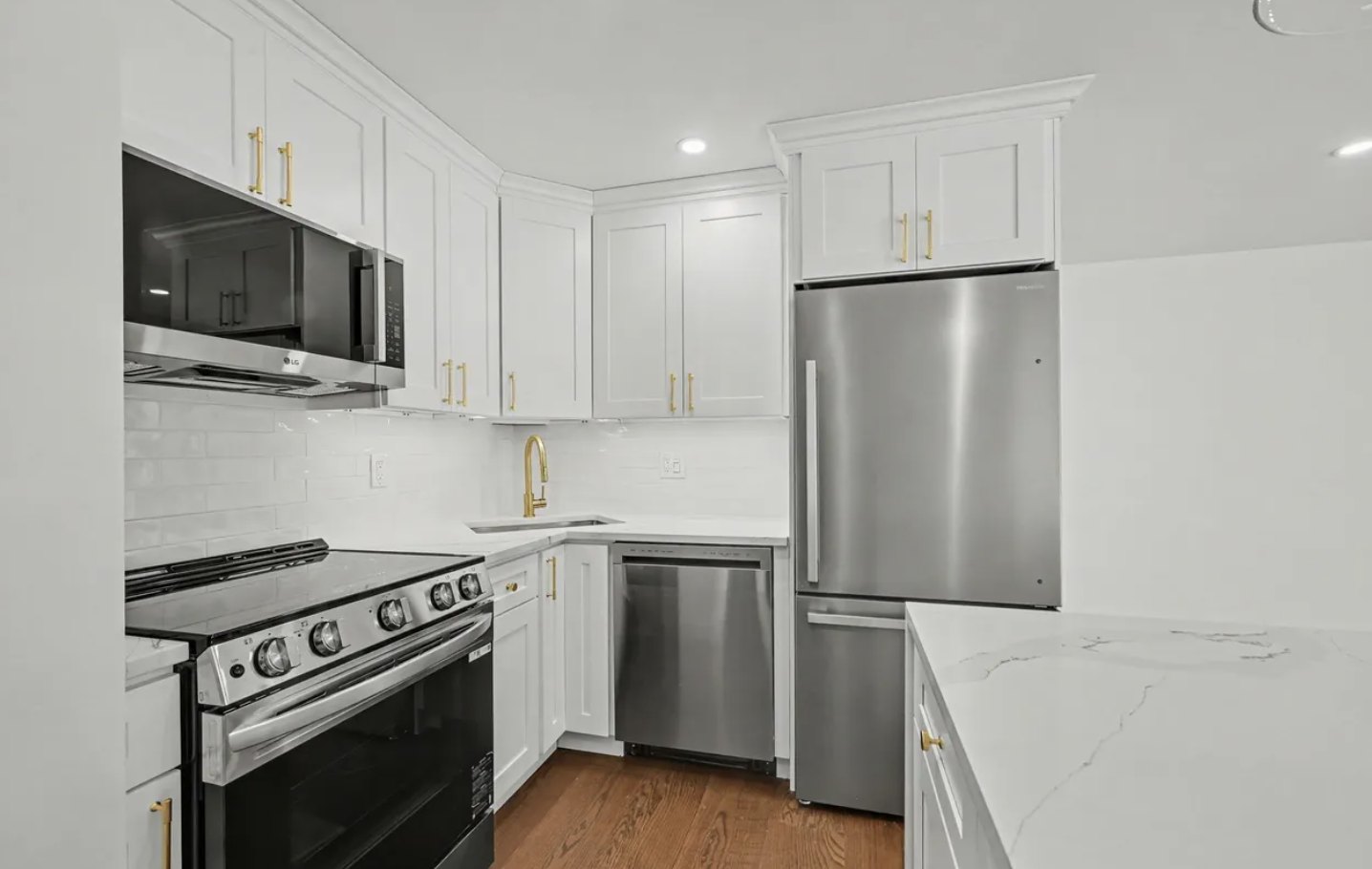
A condo that looks right in the photographs can still be a hard purchase. The kitchen is new and the price is within reach, but a mortgage depends on the building, and the monthly charge depends on a budget you have not read yet.
This guide covers what a Greenwich CT condo purchase adds to a house purchase: the documents Connecticut makes the seller deliver, what to read in them, the new condo lending rules that took effect on August 3, 2026, and the monthly cost on a $449,000 unit. It does not recommend any building.
A condo purchase has three layers
You are buying a unit, joining an association and passing a lender’s review of that association. A house has one of those. A condo has all three, and each can stop the deal.
- The unit. Condition, layout, light, parking and storage. Inspect it the way you would inspect a house.
- The association. Its declaration, bylaws, rules, budget, reserves and board decisions set what you owe and what you can do with the unit.
- The lender’s review. A conventional lender checks the building’s finances and legal position before it lends on your unit.
Our condos and townhomes page covers who these homes suit and where the supply is. The rest of this guide is the diligence.
The resale certificate and your right to cancel
Connecticut’s Common Interest Ownership Act, Section 47-270 of the General Statutes, requires the seller to give you the declaration, the bylaws, the association’s rules and a certificate from the association before the earlier of conveyance or transfer of possession. The Department of Consumer Protection calls these the resale documents and says each association must give them to the seller within ten business days of a request.
The statute sets the timing and cost.
| Point | What Section 47-270 says |
|---|---|
| Who delivers | The selling owner furnishes the package. The association prepares the certificate on the owner’s written request. |
| Association deadline | Not later than ten business days after it receives the owner’s written request and the fee. |
| Association fee | The base fee is $185, adjusted under Section 47-213, so ask the association for the current amount. Add five cents a page or $10 for an electronic copy. An expedited option of up to $10 applies if the association delivers within three business days. The fee cannot include attorney or paralegal time. |
| Your cancel right | The contract is voidable by the buyer until five days, excluding Saturdays, Sundays and legal holidays, after the certificate and required documents are delivered to the buyer or the buyer’s attorney. If they are sent by registered or certified mail, or mail evidenced by a certificate of mailing, it is seven such days after they are sent. The right ends at conveyance if that comes first. |
| Unpaid charges | The buyer is not liable for an unpaid assessment or fee greater than the amount stated in the association’s certificate. |
| Exempt communities | Section 47-215(c) says resale certificates are not required in communities of twelve units or fewer that have no development rights and no master association. |
Sources: Conn. Gen. Stat. Sections 47-270, 47-213 and 47-215(c), as published by Justia and the Connecticut General Assembly (verify the current text); Connecticut Department of Consumer Protection, Key documents for condo owners.
Read the whole package the day it arrives. The cancel clock starts at delivery, not when you get around to opening it. Have your closing attorney confirm the deadline against your contract and the way the documents were delivered.
The certificate has nineteen disclosures. These are the ones that move a decision.
- The monthly common charge and any unpaid or special assessment the seller owes.
- The capital reserve balance and the operating budget.
- Capital spending over $1,000 that the board approved for the current and next fiscal year.
- Pending suits and unsatisfied judgments, including foreclosures.
- Insurance coverage for unit owners, and any schedule of standard fixtures and improvements.
- Use and leasing limits, and any right of first refusal the association holds.
- The number of owners 60 days or more delinquent and the number of foreclosure actions in the past twelve months.
- The latest fiscal period within five years for which an independent CPA reported on the financial statements, and whether the work was a compilation, review or audit. The certificate states this. It does not itself deliver the report, so ask for it.
The Department of Consumer Protection warns that documents on file with the town clerk may not carry current financial information. Do not rely on the land records for the numbers.
What to read in the budget and the minutes
The certificate gives you the figures. The budget, the reserve study and the board minutes tell you what they mean. Ask for all three, along with the declaration and rules.
| What to look at | What a problem looks like | Why it matters |
|---|---|---|
| Reserves against the budget | A small reserve balance, or a budget that sets aside little each year, in an older building. | Underfunded reserves are paid for later through special assessments or higher charges. Fannie Mae wants at least 10% of the budget set aside for replacement reserves. |
| Planned capital projects | A roof, facade, elevator, boiler or parking structure on the board’s list with no money behind it. | The cost lands on whoever owns the unit when the bill comes. |
| Delinquent owners | More than a few units 60 days or more past due on common charges. | Unpaid charges strain the budget. Fannie Mae caps this at 15% of units. |
| Litigation | A suit by or against the association, or against the developer over safety, structure or habitability. | Material litigation can make a building ineligible for a conventional loan. Some minor cases do not. |
| Insurance | A master policy that does not match what the declaration requires, or no unit-owner coverage schedule. | It sets what you must insure yourself. Ask your own agent for a condo policy quote before you offer. |
| Rules on use and leasing | Rental caps, owner-occupancy limits, pet or renovation rules that do not fit your plan. | These bind you and shape your resale pool and your lender’s review. |
| Minutes for the past year | Repeated talk of leaks, repairs, disputes or a failed vote. | Minutes show problems before they appear in the numbers. |
Reserve and delinquency thresholds are Fannie Mae’s for conventional loans. A building can be sound and still miss them, and a building can meet them and still carry a bad roof. Treat the thresholds as a lender screen, not a quality grade.
Financing: a full building review is now the standard
Fannie Mae’s Selling Guide announcement SEL-2026-07, dated August 5, 2026, deleted the Limited Review Process for condo projects. For applications dated on or after August 3, 2026, that option is gone, so many attached condo projects need a full review. Some purchases follow other pathways, and a project with an existing Fannie Mae approval may not need a new review. A mortgage on a $449,000 condo is well inside the conforming loan limit, so these standards apply to most buyers at this price.
Fannie Mae’s waiver of project review covers detached condo units, units in two- to four-unit projects, and units in five- to ten-unit projects that are not part of a larger development or master association. It also covers certain Fannie Mae-to-Fannie Mae limited cash-out refinances. A waiver does not remove every requirement. The project still cannot be listed as unavailable in Fannie Mae’s Condo Project Manager, cannot be a condo hotel or timeshare, and must meet the assessment-priority and insurance rules.
Where a full review applies, the lender checks the HOA budget, reserves, delinquencies, legal position and insurance. These are the screens that most often decide a Greenwich condo.
| Screen | Fannie Mae standard |
|---|---|
| Replacement reserves | The budget must set aside at least 10% of annual budgeted assessment income. A reserve study can replace that calculation only if the funded reserves are equivalent, the budget includes the study’s highest recommended allocation and the study meets Fannie Mae’s other conditions. A baseline funding method cannot waive the 10% requirement. Fannie Mae’s August announcement says new reserve standards will not enter the Selling Guide until after January 4, 2027, and a Reserve Advisors summary of lender letter LL-2026-03 reports an increase to 15%. Ask your lender which standard applies to your application date. |
| Delinquencies | No more than 15% of units 60 or more days past due on common expenses, and no more than 15% on any special assessment. |
| Litigation | Material litigation can make a project ineligible. Fannie Mae allows several kinds of minor litigation that do not affect safety, structural soundness, habitability or functional use: non-monetary disputes, cases the association’s insurer is defending and covers, minor suits the association brings, recovery for problems already repaired, localized damage to a unit, association foreclosure or past-due assessment actions, and cases where damages and legal costs are not expected to exceed 10% of funded reserves. The 10% test is one exception, not a limit on every case. Developer suits over safety, structure, habitability or function count against the project. |
| Critical repairs | Ineligible with unfunded repairs over $10,000 per unit that should be done within 12 months. Other unresolved deficiencies, such as water intrusion, advanced deterioration or an evacuation order, can disqualify a project at any dollar amount. A special assessment tied to a critical repair does not cure it. The repair must be remediated. |
| Commercial space | Ineligible if more than 35% of the project or building is commercial or mixed use. |
| One owner holding many units | In a project of 21 or more units, ineligible if a single entity owns more than 20%. Smaller projects have unit-count limits. Exclusions and a conditional waiver for entities reducing their holdings exist. |
| Hotel-style operation | Ineligible if the project operates as a hotel or motel, or has mandatory rental pooling. |
Source: Fannie Mae Selling Guide, B4-2.1-03 Ineligible Projects and B4-2.2-02 Full Review Process; Announcement SEL-2026-07 (August 5, 2026). Freddie Mac publishes its own standards, and a lender may add overlays. Your lender decides, not this table.
Three practical steps follow.
- Ask your lender about the building before you offer. Fannie Mae’s public Condo Status Finder is for associations, their managers and authorized advisors, and a result of no findings does not mean the project is approved. The lender is the one who can say whether a building works for your loan.
- Add a financing contingency written for condos. Your attorney should tie it to the lender’s project review, not only to your own credit.
- Give the review room. The lender sends the association a questionnaire, and a slow management company slows your closing. Ask for a longer timeline than you would on a house.
If a building fails, you have narrower choices. WTOP reported in August 2026 that buyers in such buildings may have to use non-conforming loans, which a broker it interviewed put at 25 to 50 basis points higher. A building that fixes the problems behind a failed review can become eligible again. Cash buyers skip the lender’s review but not the building’s risks.
For FHA, a condo must sit in an FHA-approved project, or the loan must qualify under HUD’s Single-Unit Approval for a completed project of at least five units. HUD publishes a lookup for approved condos. VA loans have their own project approval, so ask the lender.
What the monthly cost looks like on $449,000
The monthly cost on a condo has two parts you can calculate and two you must read off the documents.
- Principal and interest. Set by price, down payment and rate.
- Property tax. The Town taxes a condo like any other home. Greenwich’s assessed value is 70 percent of the Assessor’s appraised market value, and the tax is assessed value times the mill rate, divided by 1,000. The general rate for the fiscal year beginning July 1, 2026 is 10.125 mills. Properties on the town sewer also pay sewer rates. See Greenwich Property Taxes Explained.
- The common charge. It comes from the resale certificate. It often covers some building costs, so compare what it includes.
- Your own insurance. A condo policy for the interior and your liability. Get a quote.
Here is the arithmetic for a $449,000 purchase with 20 percent down and a 30-year fixed loan at 7.40 percent, the Freddie Mac weekly average for October 15, 2026. Your lender’s rate will differ.
| Item | Monthly | How it is figured |
|---|---|---|
| Principal and interest | $2,487 | $359,200 loan, 30 years, 7.40% |
| Property tax (estimate) | $265 | Assumes the Assessor appraises the unit at $449,000. Assessed value is 70% of that, $314,300. At 10.125 mills the tax is $3,182 a year. With the sewer rates, about 10.484 mills, it is $3,295 a year ($275 a month). The Assessor sets the real figure. |
| Common charge | From the certificate | Varies by building and by what it covers. |
| Condo insurance | From your agent | Quote before you offer. |
| Mortgage insurance | None at 20% down | Applies below 20% down. Not in the estimator. |
Principal and interest by standard amortization. Rate source: Freddie Mac Primary Mortgage Market Survey, October 15, 2026 (30-year fixed average, 7.40%). Tax: assessed value (70% of appraised market value) times the Greenwich general mill rate of 10.125 for fiscal 2026-27; the 10.484 sewer figure adds the 0.268 and 0.091 sewer rates listed in the Board of Estimate and Taxation minutes. Illustration only.
Condo monthly cost estimator
Change the price, down payment and rate, then enter the common charge from the resale certificate. The tax line multiplies assessed value, which is 70 percent of appraised market value, by the 2026-27 Greenwich mill rate.
What an unpaid balance can do to the unit
Connecticut gives the association a lien on a unit for unpaid assessments. Under Section 47-258, the lien takes priority over a recorded first or second security interest for an amount equal to the common charges that would have come due in the nine months before a foreclosure began, plus the association’s costs and reasonable attorney’s fees. Late fees, interest and fines are left out of the nine-month amount, and if the association skips the required advance notice, the priority for costs and fees drops away. The lien follows the unit, so your attorney should confirm at closing that the seller’s unpaid charges are cleared.
You have one protection. Section 47-270(c) says a buyer is not liable for an unpaid assessment or fee greater than the amount stated in the association’s certificate. That is another reason to read the certificate closely and keep it with your closing file.
The same rule is why lenders watch delinquency rates. When enough owners stop paying, the budget cannot cover reserves, and the building falls out of conventional lending. That in turn narrows your pool of buyers when you sell. Read the delinquency count on the certificate with that in mind.
Your pre-offer checklist
- Ask the listing agent for the declaration, bylaws, rules and the resale certificate before you sign anything.
- Calendar the cancel deadline from the day the certificate is delivered.
- Read the budget, the reserve study, the capital plan and a year of board minutes.
- Check the delinquency count, pending suits, foreclosures and insurance on the certificate.
- Ask your lender to review the building against its project standards before you offer.
- Get a condo insurance quote and confirm what the master policy covers.
- Run the monthly cost with the actual common charge and the Assessor’s figure.
- Read the rules on leasing, pets, renovations and parking against how you will live there.
- Have your attorney confirm the contract protects you if the building fails the lender’s review.
Peter can pull the documents with you and walk the budget line by line. Our how to buy, condos and townhomes and Greenwich real estate pages cover the market.
Frequently asked questions
What documents do I get when I buy a condo in Greenwich CT?
Under Connecticut General Statutes Section 47-270, the seller gives you the declaration, the bylaws, the association rules and a resale certificate. The certificate states the monthly common charge, unpaid charges, reserves, the operating budget, capital spending over $1,000, pending suits, insurance, leasing limits, delinquent owners and foreclosures. The association has ten business days to produce it after the owner makes a written request and pays the fee. See Selling a Greenwich CT Home for the seller side.
Can I cancel a condo contract in Connecticut after I read the resale documents?
Yes, for a limited time. Section 47-270(c) makes the contract voidable by the buyer until five days, excluding Saturdays, Sundays and legal holidays, after the certificate and documents are delivered to the buyer or the buyer’s attorney. If they are sent by registered or certified mail, or mail with a certificate of mailing, the period is seven such days after they are sent. The right ends at closing if that comes first. Read the package the day it arrives, and have your attorney confirm the deadline.
How much are condo common charges in Greenwich CT?
They vary by building and by what they include, and this guide does not publish a Greenwich average because we have no sourced figure. The exact number for any unit is the first item on the resale certificate. Ask what the charge covers (heat, water, insurance, parking, staff) and compare the budget to the reserve line before you compare one building to another.
Can I get a conventional mortgage on any Greenwich CT condo?
Not always. For applications dated on or after August 3, 2026, Fannie Mae no longer offers a limited project review, so many attached condo projects need a full review. Detached units, small projects of two to ten units that meet Fannie Mae’s waiver terms, and some refinances can skip it. A building can fail on reserves under 10% of the budget, more than 15% of units 60 days or more past due, critical repairs, litigation, or one owner holding too many units. Ask your lender to check the building before you make an offer. See Mortgage Rates vs. a Price Crash in Greenwich.
How are Greenwich CT condos taxed?
A condo is assessed as its own property and taxed at the same town mill rate as a house. Assessed value is 70 percent of the Assessor’s appraised market value, and the tax is assessed value times the mill rate, divided by 1,000. The general rate for the fiscal year that began July 1, 2026 is 10.125 mills, and properties on the town sewer also carry sewer rates. On the general rate that is about $7,088 a year per $1,000,000 of appraised value. Your unit’s appraisal comes from the Town, not your price. See Greenwich Property Taxes Explained.
What is a special assessment on a Greenwich CT condo?
A special assessment is a charge to owners for a cost the regular budget does not cover, such as a roof, facade or boiler. The resale certificate lists capital spending over $1,000 that the board has approved for the current and next fiscal year and the capital reserve balance. Ask for the board minutes too. A thin reserve and a large planned project point to a bill for the next owner. See Greenwich condos and townhomes.
- Connecticut General Assembly, Chapter 828, Common Interest Ownership Act: Section 47-213 resale certificate fee, Section 47-215(c) small-community exemption.
- Conn. Gen. Stat. Section 47-270, Resales of units, as published by Justia (verify against the General Assembly’s current text): delivery before conveyance, ten business days, fee, nineteen certificate disclosures, five and seven day cancel right.
- Conn. Gen. Stat. Section 47-258, Lien for assessments, as published by Justia (verify against the General Assembly’s current text): nine-month priority over a first security interest, enforcement limits.
- Connecticut Department of Consumer Protection, Key documents for condo owners: documents the seller provides, resale document contents, ten business day deadline, town clerk records.
- Fannie Mae Selling Guide, B4-2.1-03 Ineligible Projects: minor-litigation categories, critical repairs, commercial space, single-entity ownership and hotel-style thresholds.
- Fannie Mae Selling Guide, B4-2.2-01 Full Review Process: 10% replacement reserve, reserve study alternative, 15% delinquency limits, insurance verification.
- Fannie Mae Selling Guide, B4-2.1-02 Waiver of Project Review: detached units, two- to four-unit projects, five- to ten-unit projects, certain refinances and the requirements that still apply.
- Fannie Mae, Announcement SEL-2026-07 (August 5, 2026): deletion of the Limited Review Process, August 3, 2026 application date, new reserve standards after January 4, 2027.
- Fannie Mae, Condo Status Finder: who can use it and what a result means.
- WTOP, Condo buyers face hurdles under new mortgage rules (August 2026): reported effect on buyers and non-conforming loan pricing, attributed to a mortgage broker.
- U.S. Department of Housing and Urban Development, FHA Condominiums: approved-condo lookup and Single-Unit Approval basics.
- Freddie Mac, Primary Mortgage Market Survey: 30-year fixed average of 7.40% for October 15, 2026.
- Town of Greenwich Assessor, FAQ on assessed value: assessed value is 70% of appraised market value; tax is assessed value times the mill rate divided by 1,000.
- Town of Greenwich Board of Estimate and Taxation, March 31, 2026 minutes: proposed general rate of 10.124 and sewer maintenance and improvement rates of 0.268 and 0.091. The minutes do not say who pays the sewer rates.
- Citizen Portal summary of the May 18, 2026 Board of Estimate and Taxation meeting: general rate of 10.125 mills for fiscal 2026-27, an 11-0 vote. A summary, not the Town’s rate schedule.
- Reserve Advisors, Fannie Mae and Freddie Mac policy changes: reports lender letter LL-2026-03 raising minimum reserve funding from 10% to 15% in January 2027. A secondary summary.
- The three-layer framing, pre-offer checklist, reading table and cost estimator are Greenwich Home Intel’s planning tools, not requirements of any statute. We did not verify: Freddie Mac’s current condo project standards, FHA owner-occupancy and delinquency limits, VA project approval rules, whether Section 47-270 and 47-258 text was amended after the published versions we read, the exact reserve standard and application date under lender letter LL-2026-03 (we could not retrieve the letter), the Town Tax Collector’s final rate schedule, who pays the Greenwich sewer rates, the current adjusted association resale-certificate fee, any Greenwich average common charge or condo price, or the appraised value of any unit. Confirm them with your lender and attorney.
Read the building before you fall for the kitchen.
A short, confidential conversation, with the resale documents in front of us, before you make an offer on a condo.
General information, not legal, tax or financial advice. Statutes, lending standards and Town figures were checked against the cited sources in October 2026 and can change; confirm them with your attorney, your lender and the Greenwich Assessor before you rely on them. This guide does not say whether any specific building or unit meets any requirement. Fair housing law prohibits steering, and this guide does not rank or characterize neighborhoods. The photo shows a condo listing and is not an offer of that property.